- unified document
- pitch
- strategy
- operational plan
- investment strategy
- phases & levels of product
- summary
- cyberia is a network of future cities
- running on a full‑stack global software platform that integrates
- residentship and names
- business registration and operation
- real estate sales and rent
- events organization
- organic food, cosmetic and health production
- energy, water and data system
- modular construction from locally sourced wood, stone and clay
- and collective intelligence
- everything to create a defensible, high‑margin global future city ecosystem worldwide
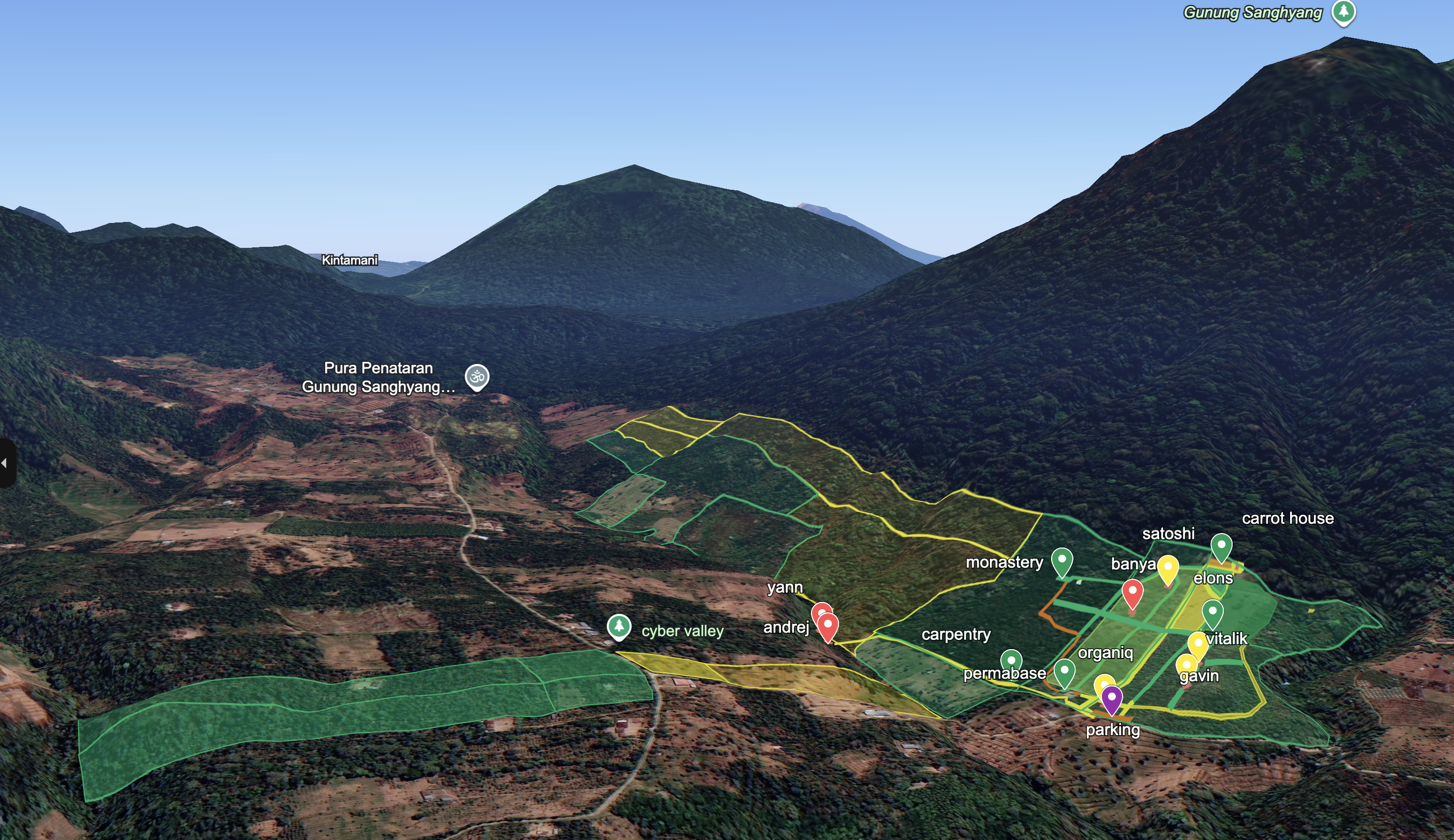
- cyber valley is chosen as a pilot of cyberia project
- its a naturally beautiful place with outstanding investment potential
- Its an iconic 37 ha land in the fastest growing region of Indonesia in the north of Bali
- Bali north is a magnet for digital nomads
- with planned modern infrastructure such as airport, railroad and highway
- with a will of federal government to create here next Hong Kong or Singapore of Asia
- The site is a master piece on a slope of sanghuyang volcano
- with 2 oceans and 12 volcano view
- sunrise and sunset views
- 7 canyons, pristine forests and productive food gardens on terraces
- The business model compounds value across daily, weekly, and monthly experiences
- The implementation enable indirect monetizing land rights and leaseholds through a tokenized global gateway: a non profit DAO in MRI holding blocking package in the Indonesian for profit PT PMA company which acquired HGB rights and operating in a strict compliance with Indonesian bylaws.
- this document packages the 5 key documents into one canvas for execution
- investor pitch
- strategy stack
- operational playbook
- capital plan
- and phased product roadmap
pitch
- problem (focused)
- rentals are fragmented, short‑term, and low‑margin
- infrastructure, food, and events are externalized → cost leakage and lost revenue
- construction is slow, expensive, and unsustainable → limits scalability
- solution (cyberia advantage)
- full‑circle rent model (daily → weekly → monthly) on a global platform → higher margins and retention
- integrated ecosystem: events, food production, and local infra → capture revenue, reduce costs
- modular, fast, sustainable construction → scalable growth with lower capex
- market opportunity
- bali and southeast asia attract nomads, wellness travelers, and festival culture; demand for autonomous, sustainable communities is rising globally
- cyberia sits at the intersection of real estate, events, food, infra, and culture, addressing multiple spends per guest across time horizons
- product roadmap (daily → weekly → monthly)
- phase 1: hiking center with tickets, food, spa, glow forest, pilot glamping
- phase 2: event space for weekly organizers, retreats, weddings, and markets
- phase 3: nomad hub for monthly memberships across coliving, coworking, and wellness
- anchor: burn.city yearly festival for global brand gravity
- economics and revenue stack
- revenue: rent, events, f&b and wellness, infra services, construction services/licensing, land rights monetization (hgb), district and micro‑leaseholds
- margin stack: each pillar internalizes spend and compresses opex while increasing pricing power
- moat
- five fundamentals working as one system; tokenized participation; cultural anchor; vertical food and infra; modular construction speed
- go‑to‑market
- daily visitors → weekly organizers → monthly residents; partnerships with farmers (nandu), wellness brands, event producers, and tech collectives
- the ask (to tailor later with numbers)
- raise via offshore tokenized vehicle and pt pma equity; uses: infra, modular builds, event platform, nandu ramp, festival prep; investor exposure to yield and land‑backed upside
strategy stack: the five pillars
-
land model innovation
-
buy cheap and beautiful remote land ⇒ build fast: months not years
-
global payment as ethereum L2 with instant cross border settlement
-
compliance with local laws: instant swap into local currency ⇒ full taxation
-
full‑circle real estate: daily → weekly → monthly → yearly → ownership
-
events integration
-
global event platform
-
rent yields 200 per room per day
-
the app that earns extra for venues and event organizers ⇒ 10% go to plaftorm
-
- yearly anchor festival: burn.city
-
food production system
-
land is productive, not decorative: $300 per room yoga with food
-
nandu grow program: farmer incubator with efficient farming guidelines
-
local market with direct supply to restaurant, spa, and health venues
-
infrastructure sovereignty
-
energy is not the cost but earn yield for residents and operators
-
water is collected, filtered and recycled: drinking water right from the shower
-
data
-
, and software locally; microgrid, water capture/treatment, local data stack → cost control and resilience
-
construction model
-
cool, fast, cheap builds: one floor, low density, natural materials (teak, bamboo, local wood, clay, pozzolan, stone), modular and prefab on site
land, equity, and rights strategy
-
lease
-
key payment
-
yearly rent
-
utility
-
revenue share
-
trade %
structure
- offshore entity with tokenized shares for global investors and participants
- pt pma as local operating entity for legitimacy, permitting, and revenue operations
- rights monetization and packaging
- trade hgb rights on and around the site; current sale offers: rockets block (4m) and bridge block (2m)
- package 10 districts as medium‑to‑long‑term leaseholds for institutional and regional partners
- carve ~80 micro‑leaseholds inside 3 districts for individuals, smes, and residents as entry tier
- operational playbook
- phase 1 — foundation (months 0–6)
- incorporate offshore, issue tokens; establish pt pma; align governance and reporting
- open hiking center: trails, glow forest, day‑spa, f&b kiosks, pilot glamping (5–10 units)
- spin up nandu wave 1: select 10–15 farmers, starter plots, post‑harvest flow to resto/spa
- stand up modular prefab yard; produce first batch of bamboo/wood modules
- kpis: daily tickets sold, aov (tickets+spa+f&b), gross margin %, time‑to‑build per module, nandu yield per m²
- phase 2 — expansion (months 6–12)
- execute hgb trades (rockets, bridge, neighbor options) and deploy proceeds to event grounds and utilities
- launch event space: stage, logistics, storage, back‑of‑house; open weekly market calendar
- expand nandu wave 2; integrate cold‑chain lite; menu integration in resto and spa products
- kpis: event days/month, organizer nps, food cost of goods %, infra opex per kwh/m³/gb, build cycle time
- phase 3 — consolidation (months 12–24)
- open nomad hub: 40–80 beds modular coliving, coworking, wellness bundles, monthly plans
- market and sell 10 district leaseholds; sell ~80 micro‑leaseholds across 3 districts
- event platform v1 live; burn.city festival groundwork with permitting, safety, sponsors
- infra sovereignty scale‑out: storage, water treatment, local data center v1; software layer for bookings and governance
- kpis: occupancy (daily/weekly/monthly), leasehold absorption rate, recurring membership % revenue, infra cost/guest‑night
- phase 4 — flywheel and replication (months 24+)
- stabilize revenue mix (rent/events/food/infra/construction); token governance with revenue‑share logic
- run burn.city annually; codify playbook; evaluate replication or licensing to new regions
- kpis: ebitda margin, revenue per hectare, rev/employee, guest ltv, payback period on modules
investment strategy
-
instruments
-
offshore tokens as share‑representing units for global investors; pt pma equity for local partners
-
sources and uses (to be filled with numbers)
-
sources: token round(s), pt pma equity, hgb sales (rockets 4m, bridge 2m), district and micro‑leaseholds proceeds, operating cashflow
-
uses: modular construction, event grounds, infra (energy/water/data), nandu capital and working capital, trail and glow forest capex, platform software, festival capex/opex
-
investor alignment and protections
-
transparent cash waterfall; reporting cadence; governance roles for major holders; performance covenants linked to occupancy, event cadence, infra opex targets, and construction cycle time
-
exit and liquidity paths
-
token liquidity as adoption grows; dividends from stabilized ebitda; strategic sale of operating company or districts; replication/franchise royalties
-
phases and levels of product development
-
phases (time‑based)
-
phase 1 — daily experience: hiking center with glow forest, spa add‑ons, f&b, pilot glamping
-
phase 2 — weekly experience: event space operations, organizer platform, markets, retreats
-
phase 3 — monthly experience: nomad hub memberships (coliving, coworking, wellness)
-
levels (scope‑based, integrated with capital plan)
-
level 1 — foundation: offshore tokens
-
level 2 - pt pma setup, investor materials; open hiking center
-
level 3 — rights monetization: execute hgb trades; deploy to event infrastructure and daily scale‑up
-
level 4 — leasehold packaging: sell 10 districts (macro) and ~80 micro‑leaseholds (entry tier) while opening the nomad hub
-
level 5 — ecosystem stabilization: mature token governance, annual festival, replication readiness
-
unit economics scaffolding (placeholders to fill with your data)
-
daily product
- average ticket price; spa attachment rate; f&b aov; variable cost per guest; contribution margin per guest
-
weekly product
- event day rate; ancillary revenue per event (f&b, rentals); organizer acquisition cost; gross margin per event day
-
monthly product
- arpm (average revenue per member), occupancy %, average length of stay, service cost per member, contribution margin per room‑month
-
infra and construction
-
lcoe of microgrid; water cost per m³; data cost per gb; module capex per m²; install days per module; maintenance per module‑year
-
land and rights
-
price per district leasehold; micro‑leasehold price and take‑rate; hgb transaction margin; payback period on capex funded by rights proceeds
governance and reporting cadence
-
monthly
-
kpi dashboard: occupancy by tier, event cadence, infra opex/guest‑night, module build cycles, nandu yields and cogs, cash position
-
quarterly
-
investor letter; audited revenue mix; progress vs milestone roadmap; governance proposals snapshot
-
annual
-
festival after‑action report; capital allocation review; replication/franchise evaluation
risk register and mitigations
-
permitting and land rights
-
mitigate with pt pma compliance, staged permitting, legal counsel, and community engagement
-
construction and supply chain variability
-
modular designs with interchangeable components, multi‑supplier bamboo/wood sourcing, on‑site prefab buffer inventory
-
seasonality and demand shocks
-
diversify daily/week/month mix; anchor festival timing; local market programming; dynamic pricing and memberships
-
infra reliability
-
n+1 design for power and water; maintenance schedules; telemetry and alerting for microgrid and treatment systems
-
liquidity and capital timing
-
staggered rights sales; milestone‑based token tranches; bridge facilities tied to leasehold absorption rates
-
execution checklist — next 90 days
-
legal and structure
- finalize offshore token terms; register pt pma; align cap tables and governance docs
-
product and ops
- open hiking center mvp; glow forest lighting and safety; day‑spa menu; initial f&b kiosks
- launch nandu wave 1; set buy‑back prices; integrate with resto/spa inputs
- stand up prefab yard and produce first 10 modules; document build time and cost per module
-
land and capital
- data room for hgb rockets and bridge; soft‑circle buyers; term sheets and closing plan
- prepare district and micro‑leasehold prospectuses with maps, rights, and obligations
-
platform and brand
-
booking stack for daily and weekly; organizer crm; brand guide; burn.city save‑the‑date and permitting path
-
visual diagram blueprint (for your designer)
-
central node: cyberia dev & manage co.
-
five spokes with minimal labels and icons
-
rent model → calendar/house icon
-
events → stage/spotlight icon
-
food → leaf/plate icon
-
infrastructure → lightning/water/cloud icon
-
construction → bamboo/hammer icon
-
footer strip shows phases 1–3 and levels 1–4 aligned on a simple timeline bar