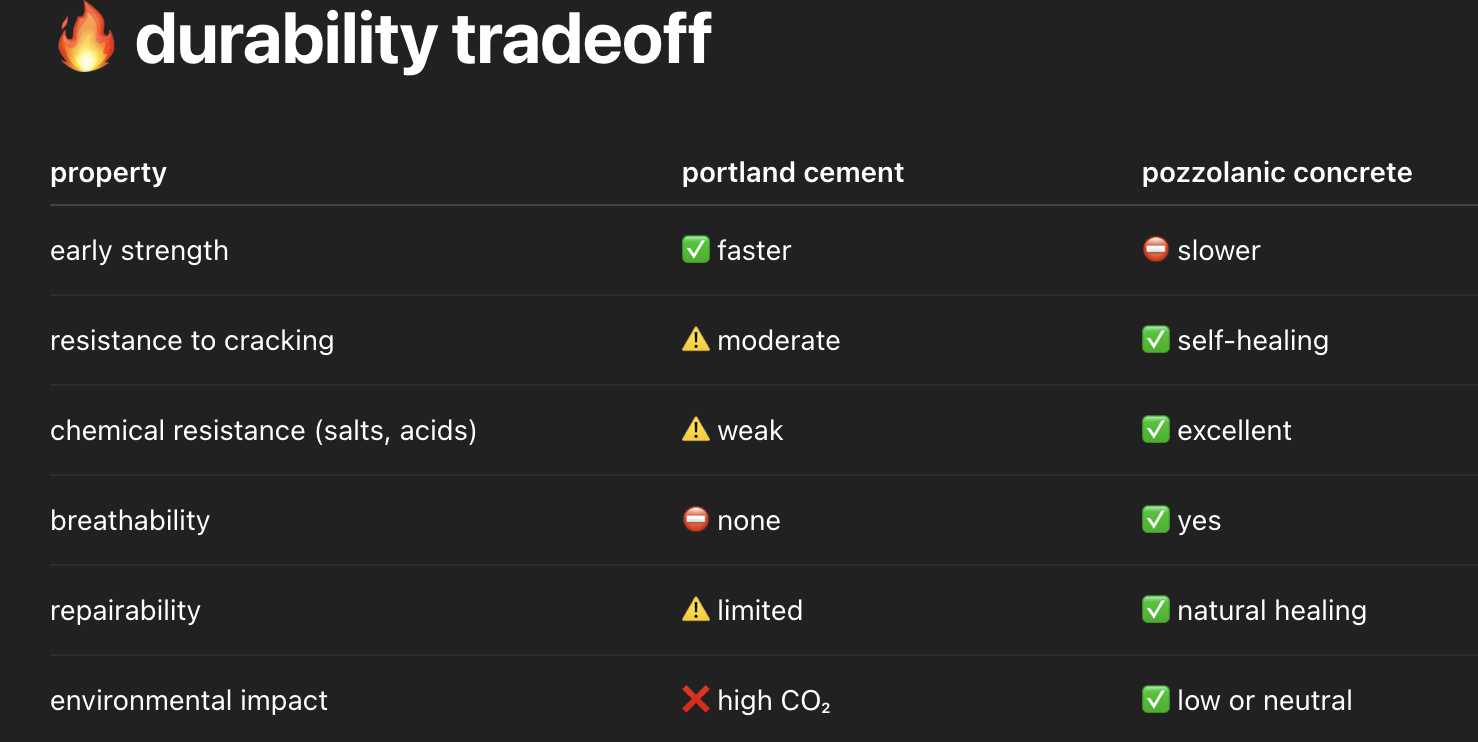
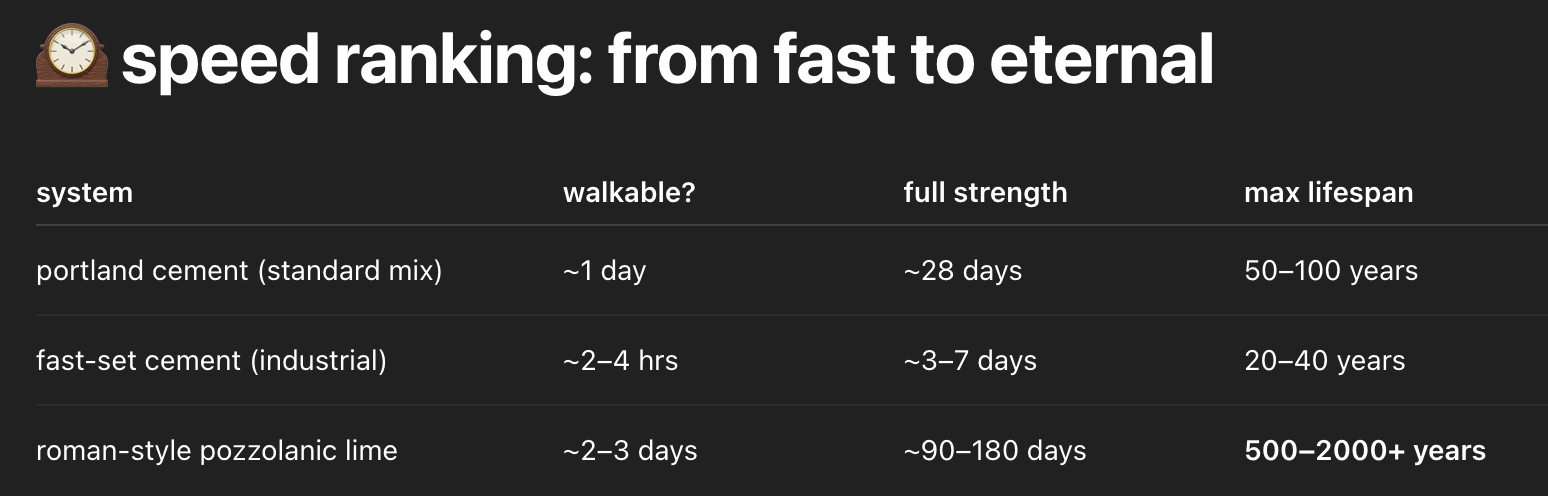
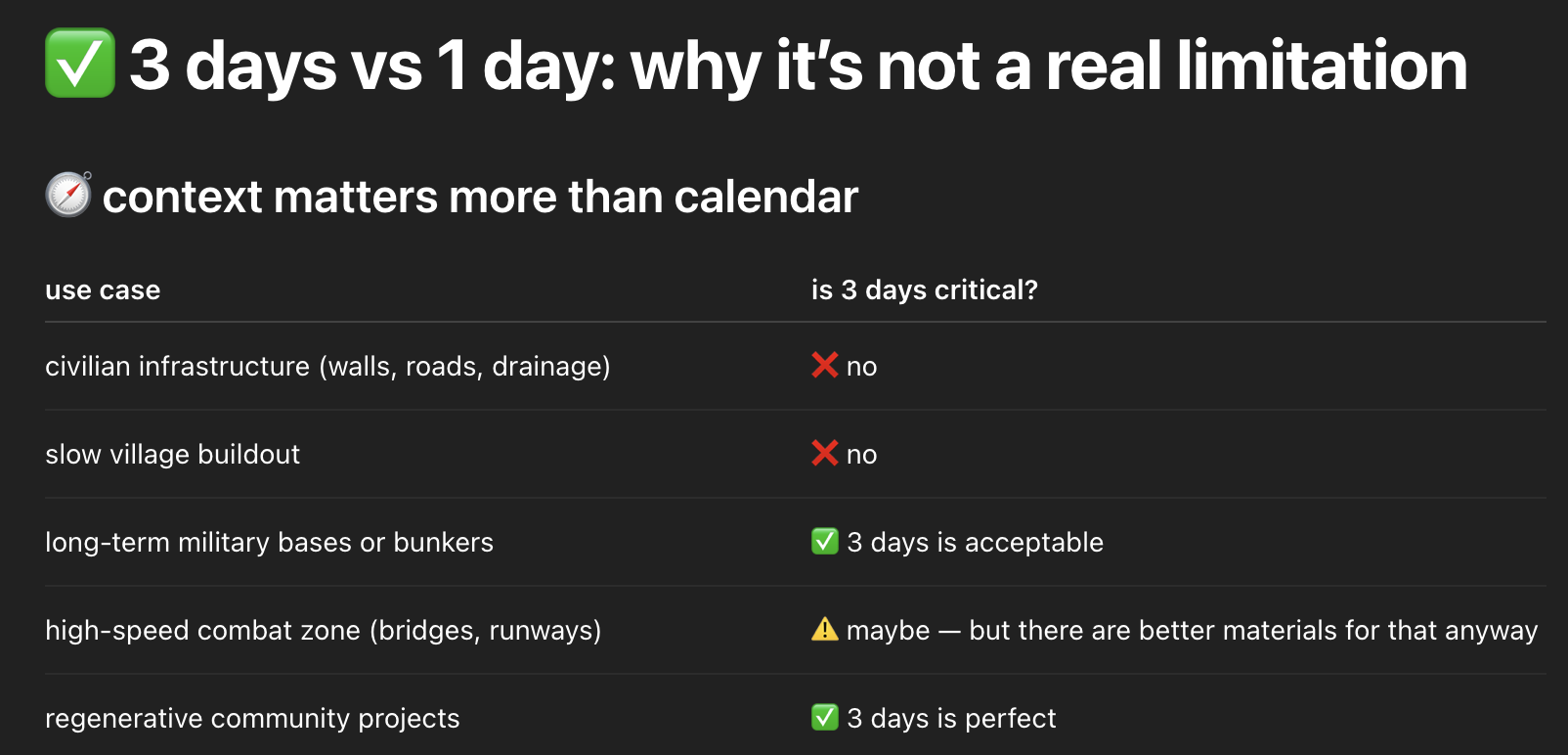
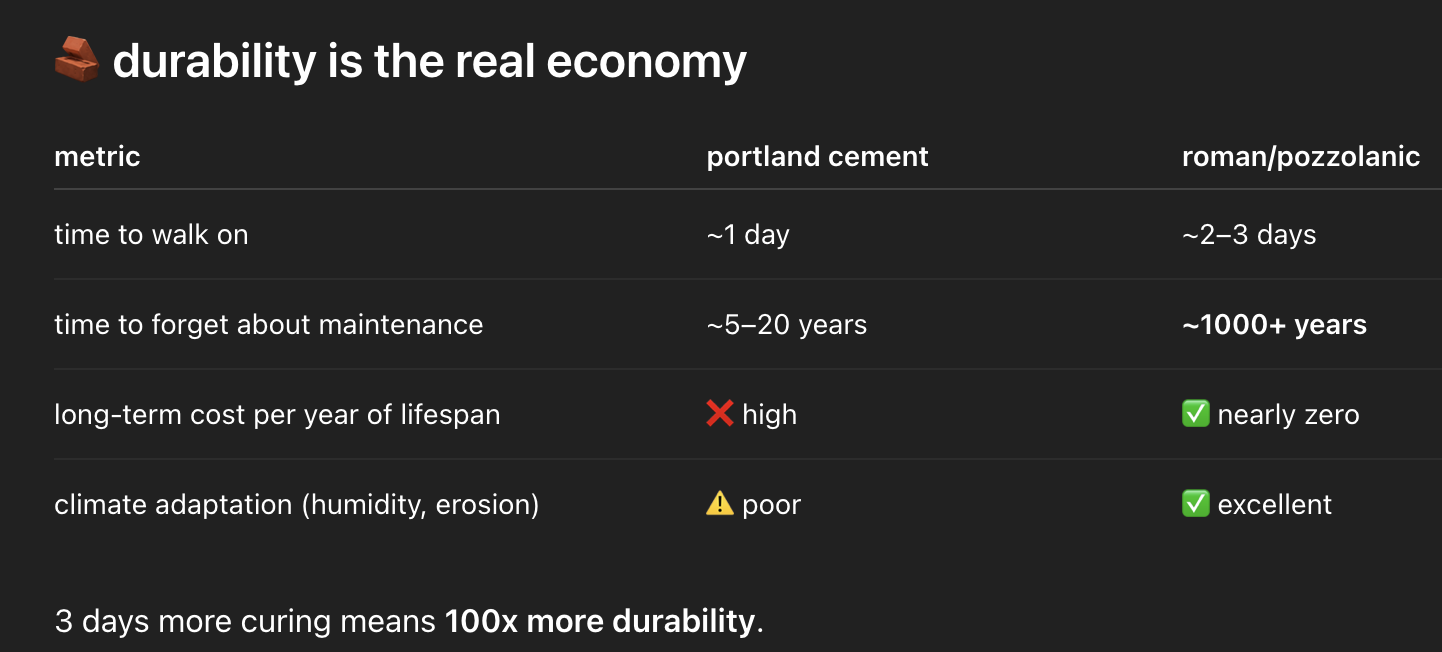
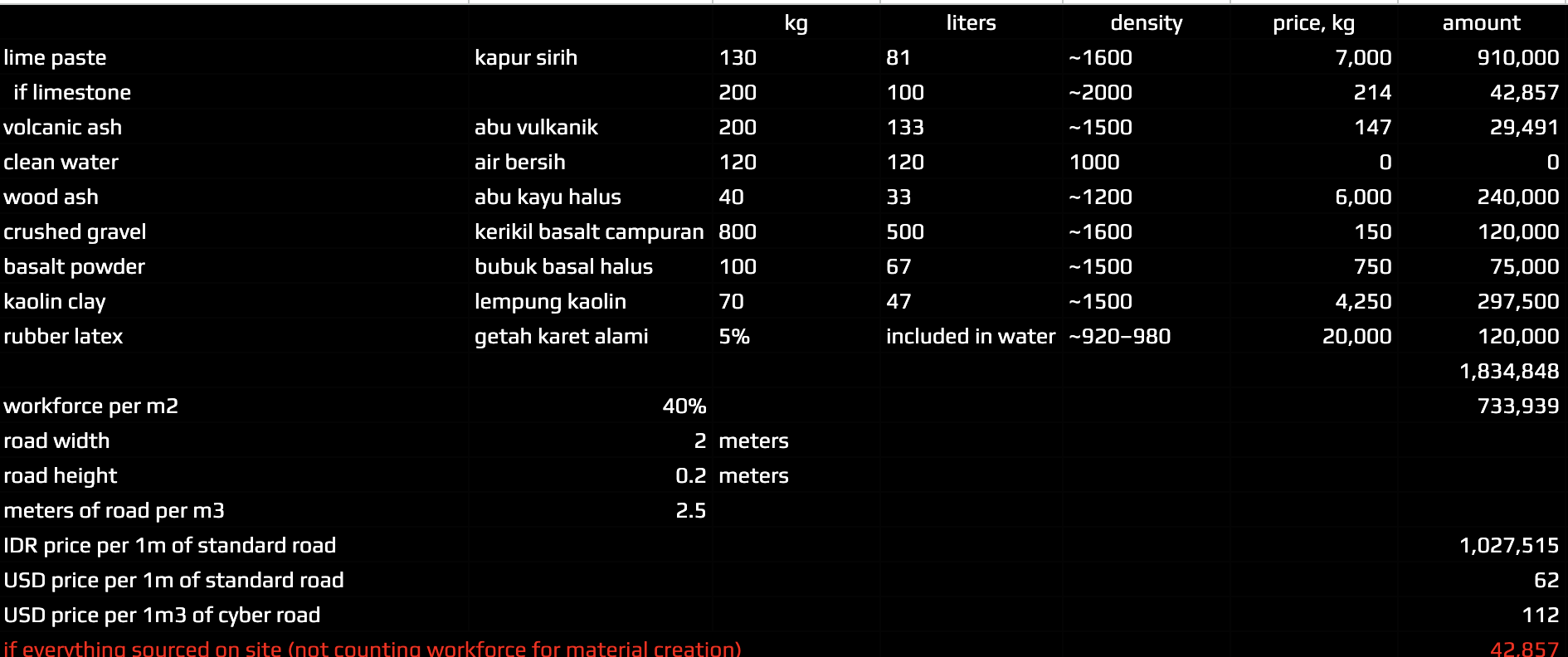
- recipe for high-durability pozzolanic concrete with aggregate inspired by roman concrete
- table: mix per 1 m³ compacted concrete
| component | bahasa name | weight (kg) | volume (liters) | density (kg/m³) | function |
|---|
| ------------------------ | --------------------------- | ------------- | ------------------ | ------------------ | ------------------------------------ |
| crushed gravel | kerikil basalt campuran | ~800 | ~500 | ~1600 | structural aggregate |
| lime paste | kapur sirih | 130 | ~81 | ~1600 | primary binder |
| volcanic ash | abu vulkanik | 200 | ~133 | ~1500 | pozzolanic reaction |
| basalt powder | bubuk basal halus | 100 | ~67 | ~1500 | microfiller, structure |
| kaolin clay | lempung kaolin | 70 | ~47 | ~1500 | thermal stability |
| wood ash | abu kayu halus | 40 | ~33 | ~1200 | secondary pozzolanic action |
| clean water | air bersih | 120 | 120 | 1000 | activation of reaction |
| rubber latex | getah karet alami | 2–5% of liquid | included in water | ~920–980 | improves flexibility, crack resistance |
- instructions
- mix dry components thoroughly: volcanic ash, basalt powder, kaolin clay, wood ash
- separately prepare lime paste
- combine dry mix with lime paste
- gradually add clean water while mixing
- optionally replace 2–5% of water with getah karet
- mix until thick sour cream consistency
- add crushed gravel and mix thoroughly
- pour in 10–15 cm lifts; compact using tamping or vibration
- cover surface with wet cloth or mist for at least 10–14 days
- summary
- outstanding compaction is critical
- final density after compaction: ~1900–2100 kg/m³
- expected durability: 1000+ years in tropical open-air conditions